Environmentally Concerned Citizens of South Central Michigan


ECCSCM meetings - 3rd Wednesday every month, Hudson Community Center, 7:30 p.m.
Email us: contact-us@nocafos.org

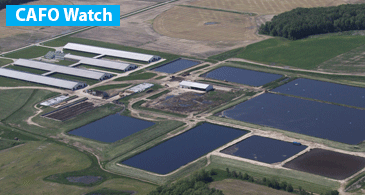
In the last few years, 12 livestock factories, most of them dairies, have been built near the town of Hudson, Michigan.  Large livestock operations that confine animals year-round are called Confined Animal Feeding Operations (CAFOs).

Environmentally Concerned Citizens of South Central Michigan (ECCSCM) developed this website to provide information on the pollution and the damage CAFOs have caused in our community and its watersheds, and to promote Sustainable Alternatives (buy local food & pasture-based meat--see sources). As family farmers and neighbors, we believe agriculture must take responsibility for its actions in rural communities. CAFOs have failed us. They have damaged our farming communities, degraded our natural resources, and polluted our watersheds.

We support vanguard, responsible agriculture, farming that looks ahead to the next generations, preserves biodiversity, raises animals in a healthy environment, does no harm to its neighbors, enhances the natural assets of living communities, and protects our natural resources -- air, soils, groundwater, streams, and lakes.
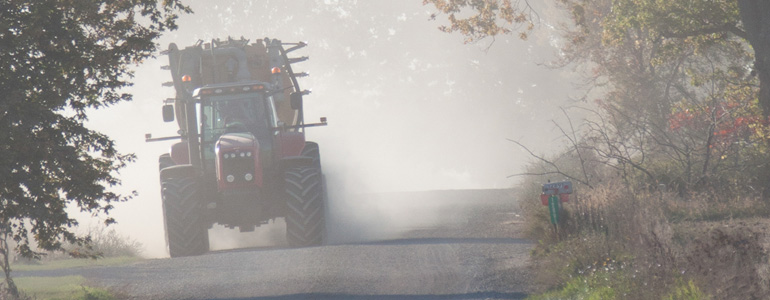
STENCH/EMISSION ALERTS!


BULLETINS: (last few months--for full list see News page)

2 NEW REPORTS DOCUMENT RISKS, COSTS OF CAFOS:
1)POLLUTION, DISEASE RISKS FROM CAFOS.
2-yr study by the Pew Charitable Trusts and the Johns Hopkins Bloomberg School of Public Health cite risks from the huge amount of animal waste industrial farms generate, use of antibiotics by such facilities leading to the development of drug-resistant bacteria and the high concentration of animals on industrial farms increasing the risk of disease spreading. The report recommends phasing out the most inhumane production practices within 10 years; implementing federal performance-based standards to improve animal welfare; and expanding and reforming animal agriculture research. See the full report.

2) CONFINED ANIMAL FEEDING OPERATIONS COST TAXPAYERS BILLIONS
. The Union of Concerned Scientists calls for POLICIES THAT REDUCE CAFO SUBSIDIES AND ENCOURAGE MODERN, SUSTAINABLE MEAT, MILK AND EGG PRODUCTION. See "CAFOs Uncovered: The Untold Costs of Confined Animal Feeding Operations" for details of the policies that have allowed CAFOs to dominate U.S. meat and dairy production. "CAFOs aren't the natural result of agricultural progress, nor are they the result of rational planning or market forces," said Doug Gurian-Sherman, a senior scientist in UCS's Food and Environment Program and author of the report. "Ill-advised policies created them, and it will take new policies to replace them with more sustainable, environmentally friendly production methods."

PULIC HEARING FOR WALDRON DAIRY AND VREBA-HOFF PERMITS -- MAY 22, 2008 -- 6:30 p.m.
HUDSON MIDDLE SCHOOL AUDITORIUM -- 771 North Maple Grove Avenue, Hudson, MI
The hearings are for public comment -- PLEASE COME AND SPEAK, OR HAND IN WRITTEN COMMENTS. Waldron Dairy (formerly Mericam, at Camden & Meridian Rds) is owned by Vreba-Hoff and plans major expansion. More liquid manure on tile-drained fields, more pits.
Both hearings will be held on the same evening, Waldron hearing first, then Vreba-Hoff. DEQ notes that the hearings are "an opportunity for the public to be heard, DEQ does not comment or answer questions. The hearing is recorded and DEQ will prepare a written response to comments. All comments will be considered but only comments applicable to the permit will receive a written response."
See more details, including links to the draft permits for Waldron, for Vreba-Hoff.
Or email Mike Bitondo, DEQ, for details: bitondom@michigan.gov

week of April 14 - neighbors report Chesterfield Dairy in Lyons, OH (which receives Vreba-Hoff manure) is transporting manure back to Michigan, spraying in Seneca Twp. Numerous complaints from residents to ECCSCM and local officials.

March 27 -DEQ cites Hartland Farms and Bakerlads for illegal discharges of manure (see March 3 below).

March 12 - For 7 months, Vreba-Hoff has violated repeated DEQ orders to immediately close a manure storage structure that failed and overflowed last summer (ordered Aug 24, 2007, Sept 17, 2007, Jan 22, 2008, and again March 12, 2008). When will they comply? This manure lagoon lies adjacent to the source of a tributary of Bean Creek -- the tributary was added to Michigan's impaired water list in 2004, after repeated manure discharges by Vreba-Hoff. Think of the consequences as Lake Erie headwaters are polluted, year after year.

March 7 - Hoosiers for Sustainable Agriculture serves Notice of Intent to Sue the US Fish & Wildlife Service and Vreba-Hoff CAFO for failure to protect a rare colony of Mitchell's Satry butterfly, one of the rarest species in the world. See full press release. The Notice sets forth violations of the federal Endangered Species Act resulting from Vreba-Hoff’s plan to build “Toll-Tail Dairy, LLC” next to the fragile Pigeon River habitat. Mitchell’s Satyr lives only in a rare type of fen, at only 2 small locations in Indiana and only 13 small locations in Michigan. Under the Endangered Species Act, when proposed development threatens a listed species, the FWS has a duty to ensure that a Habitat Conservation Plan is prepared and approved before construction begins. However, in this instance FWS refused to exercise its duty even though the planned Toll-Tail Dairy will likely extinguish the Pigeon River colony of Mitchell’s Satyr. Ironically, the FWS website lists “livestock production” as one of the top threats to Mitchell’s Satyr.

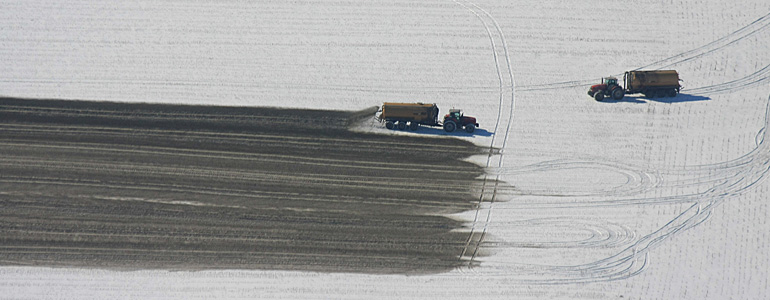
March 10 - DEQ cites Waldron Dairy (Vreba-Hoff owned) for multiple violations, including 2 illegal discharges of manure to Bean Creek Watershed after application of wastes to frozen and snow-covered ground.

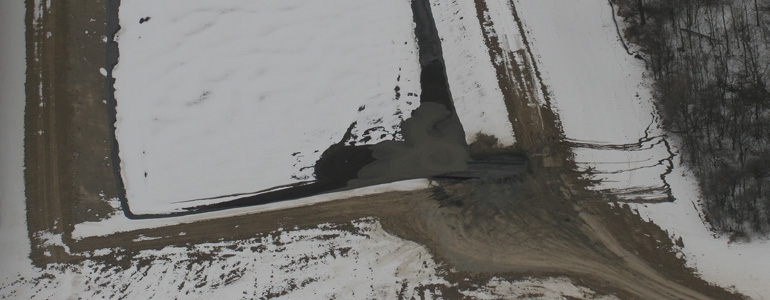
March 3 - rain started late morning. Almost immediately, Hartland Farms manure was discharging to Bear Creek from Hughes Hwy application last week, Bakerlads manure was discharging to South Branch of the River Raisin from Cadmus & Morey application yesterday, road is flooded, and Bakerlads are still spreading, in the rain.
manure
3-3-08 Bakerlads waste running off the manure-black field to Cadmus Rd, drains to S.Branch River Raisin

50 lagoons in our area
approx. 134,696,000 gallon capacity

Vreba Hoff I - 5 lagoons - 44,200,000 gal. (actual)
Vreba Hoff II -4 - 29,690,000
(actual)
Hartland Farms - 4 - 5,265,000
(3,265,000 actual, est; 2,000,000 for new lagoon)
Stutzman - 1
Hoffland Dairy- 3 - 9,723,975
( actual)
Bleich Dairy - 3 - 4,126,000
(3,126,000 actual; est. 1,000,000 for new lagoon)
Bruinsma Dairy - 5 - 12,500,000
(actual)
Mericam/Waldron Dairy - 2- 8,400,000
(actual)
Flevo Dairy - 8 - 20,791,500 
(actual)
State Line Farms - 6
Marvins - 2
Stoutcrest- 3

data assembled from CAFOs' CNMPs, 2007

See animation on livestock factories, The Meatrix! And now, The Meatrix II: Revolting (on dairy CAFOs)

Living a Nightmare: Animal Factories in Michigan
click for more information and order form

What are CAFOs?
Dairy CAFOs confine 700 or more cows, often several thousand cows, in long steel barns, year-round. CAFO cows never graze. CAFOs look like factories, and they are -- animal factories.


One cow produces more than 20 times the waste a human produces. Waste from 10,000 CAFO cows in this small area = untreated waste of a city of 200,000 people.

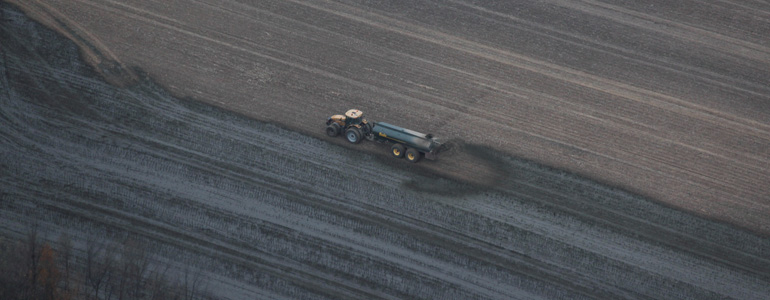
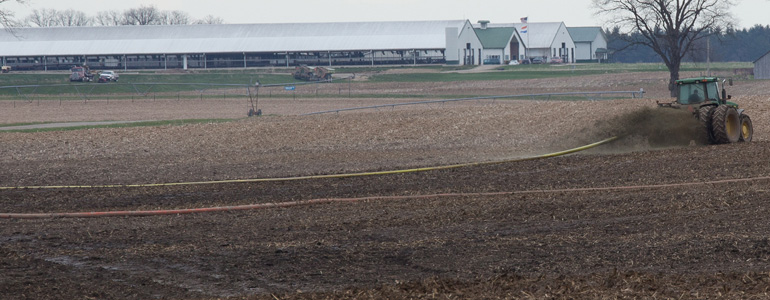
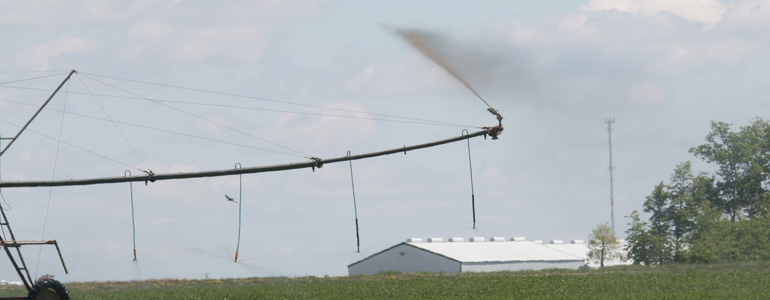
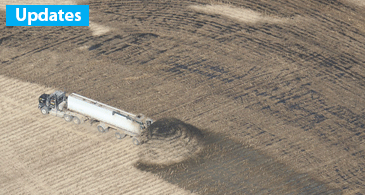
Untreated CAFO waste is liquified with clean groundwater -- instantly polluted -- then pumped to cesspits or holding "lagoons" until it is pumped again and injected or sprayed onto fields around Hudson (pop. 2500). Some manure makes good fertilizer. But too much manure, especially the liquid manure from CAFOs, is a major pollutant of soils and waterways. Animal manure and and animal carcasses contain many pathogens (disease-causing organisms such as Cryptosporidium, E. coli bacteria, Listeria -- see a comprehensive list of pathogens and symptoms posted by the Environmental Protection Agency.). These pathogens can threaten human health, other livestock, aquatic life, and wildlife when introduced into the environment.

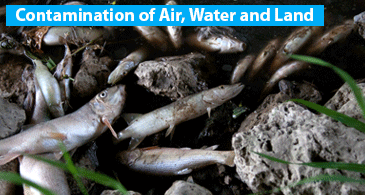
When liquid manure enters streams or lakes, it is called a discharge. Discharges that violate Michigan's water quality standards are illegal.

CAFOs in this area, all of them, have discharged illegally. Since 2000, there have been 291 violations and discharges, many of them multiple-day violations, confirmed by the Michigan Department of Environmental Quality in the Hudson area (see violations list). A 100% failure rate in pollution prevention.

    We call for a moratorium on new and expanding CAFOs.
    We call for an end to factory farming as a means of food production.

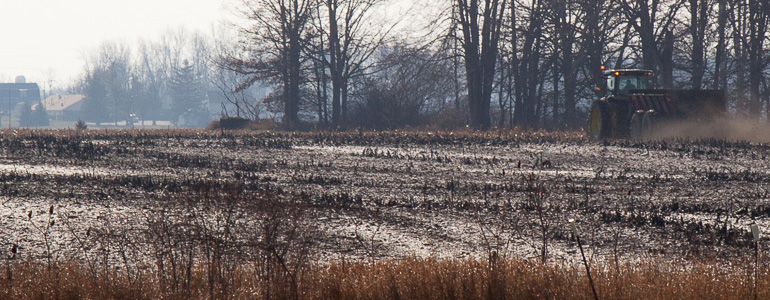
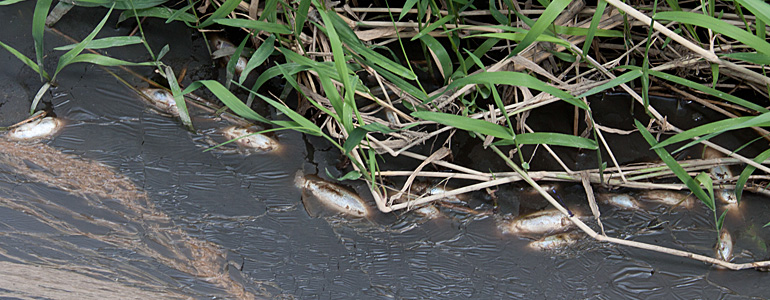
On the Local Pollution pages, look at what we see around here every day -- waste-polluted water, silage leachate runoff, drainage tile discharges, the destruction of vegetation along streams, violations of manure management practices. Too bad the photos aren't Scratch & Sniff!

CONTACT INFO if you notice CAFO POLLUTION

Air Pollution
(stench, strong odors)
call DEQ Air Division, Jackson Dist: 517-780-7898

Water Pollution (runoff from fields, discolored stream, water with odor)
call DEQ Water Division, Jackson Dist: 517-780-7841 or 517-780-7917

or 24-hr DEQ PEAS (Pollution Emergency) Hotline: 1-800-292-4706

or contact ECCSCM and we will report the pollution: contact@nocafos.org


 ECCSCM, P.O.Box 254, Hudson, MI 49247
 contact-us@nocafos.org
To become a member of ECCSCM
click here